icture a car that fits in a motorcycle parking spot, costs less than a high-end e-bike, and still keeps you dry in a downpour. That's the Mini Lotus No. 1—a micro electric vehicle that's been quietly rolling through my neighborhood in Chengdu for the past six months. I first noticed one parked outside a noodle shop, its 1.8-meter body almost comically small next to a delivery scooter. But the owner, a retiree named Zhang, told me he's put 4,000 kilometers on it in half a year。mostly grocery runs and grandkid pickups. "It's not a car," he said. "It's a raincoat with wheels."That's the core appeal: Mini Lotus No. 1 strips driving down to its essentials. You get a 30 kW motor, a 10 kWh battery, and a top speed of 60 km/h. No touchscreen, no lane-keeping assist, no heated seats. The interior is about as luxurious as a garden shed—hard plastics, a simple digital dash, and a single USB port. But the turning radius is just 3.5 meters, which means U-turns on narrow alleys are effortless. Charging from a standard wall outlet takes six hours;a fast charger gets you to 80% in 40 minutes. Range?Around 100 km in real-world city driving, which。let's be honest, covers 90% of daily trips for most people.I test-drove one for a week. The first thing you notice is the silence—no engine rumble。
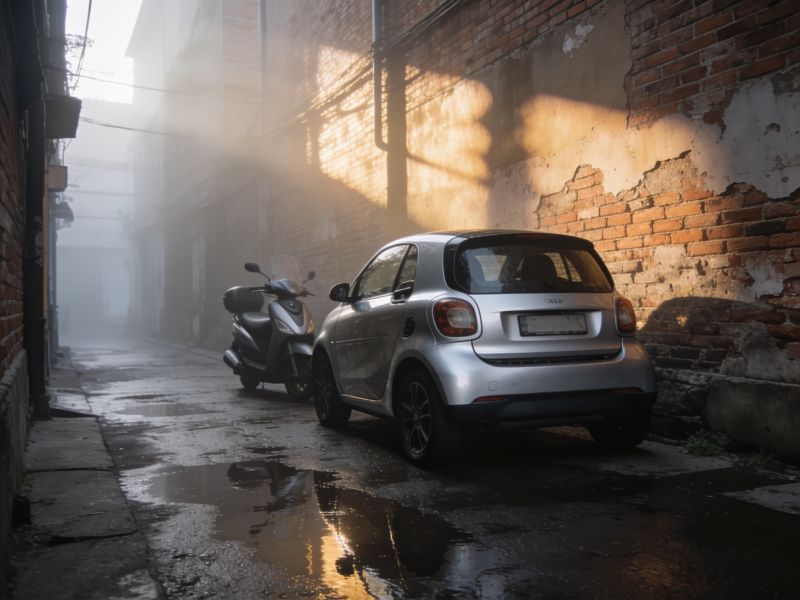
just tire hum and the whine of the electric motor. At traffic lights, pedestrians often do a double-take;the Mini Lotus No. 1 looks like a toy, but it's a street-legal vehicle with a proper license plate. Parking is a revelation. I squeezed into a gap between two dumpsters that no sedan could touch. The downside?
Highway driving is out of the question—60 km/h feels dangerously slow when trucks are barreling past. And the suspension is stiff enough that speed bumps become minor events. Still, for short hops, it's oddly liberating. You stop worrying about speed and start enjoying the route.Safety is the elephant in the room. The Mini Lotus No. 1 has a steel frame and dual front airbags。but no electronic stability control. Crash tests?None published. That's a gamble. I spoke to a delivery driver who owns one and he shrugged: "At 40 km/h, what's going to happen?" Fair point, but I'd still avoid main roads during rush hour. The other trade-off is cargo space—there's a 150-liter trunk behind the rear seats, enough for two backpacks or a week's groceries. Fold the seats and you can haul a small bookshelf. Practicality, not comfort, is the design ethos.Would I buy one?
For a second car in a dense city, absolutely. The Mini Lotus No. 1 costs around 28,000 RMB (roughly $3,900), and electricity runs about 1 RMB per 10 km. Insurance is cheap, and you can park it almost anywhere. It's not for everyone—if you need highway range or room for five adults, look elsewhere. But for solo commuters。delivery fleets, or retirees like Zhang, it's a genuinely smart solution. The auto industry keeps chasing bigger and faster;the Mini Lotus No. 1 asks a different question: what if smaller and slower is actually better?In my book, that's worth a test drive.